
Last updated November 15, 2026
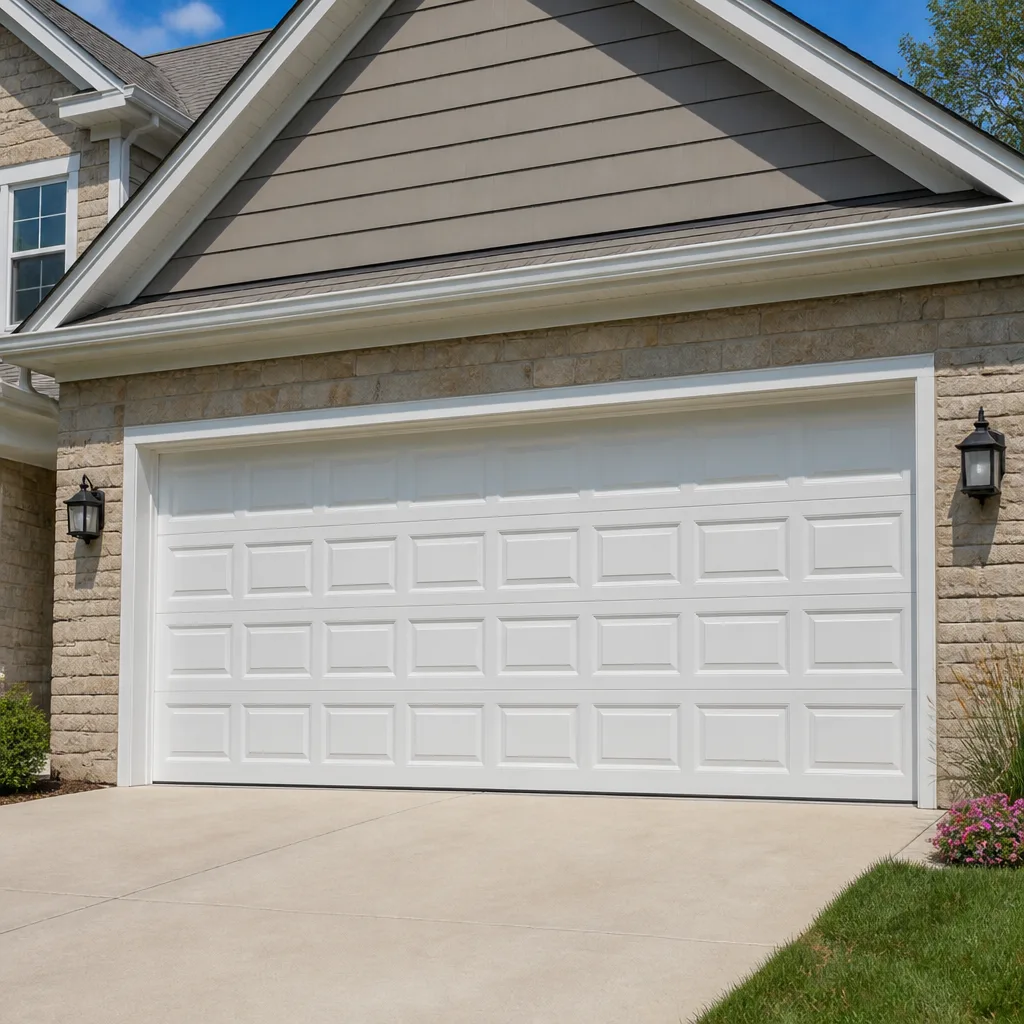 Raised-panel steel
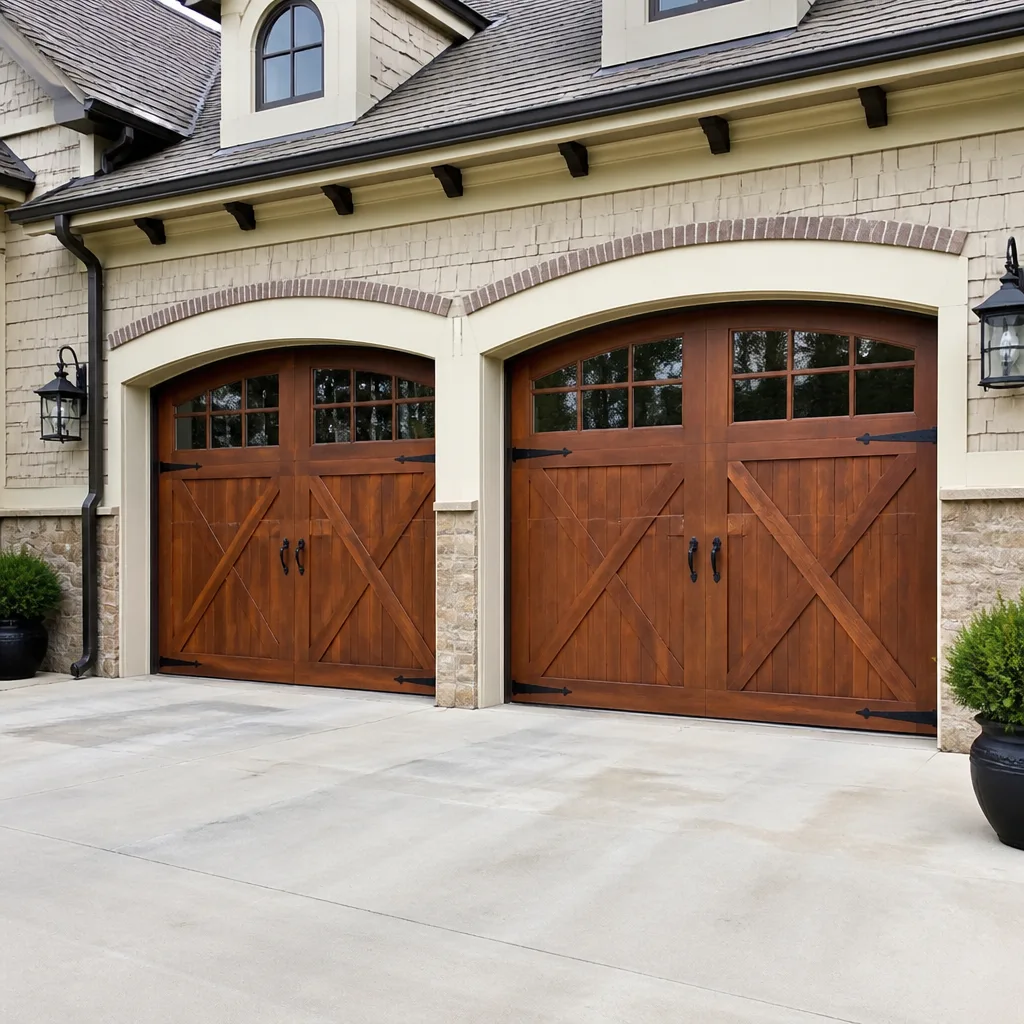 Carriage house
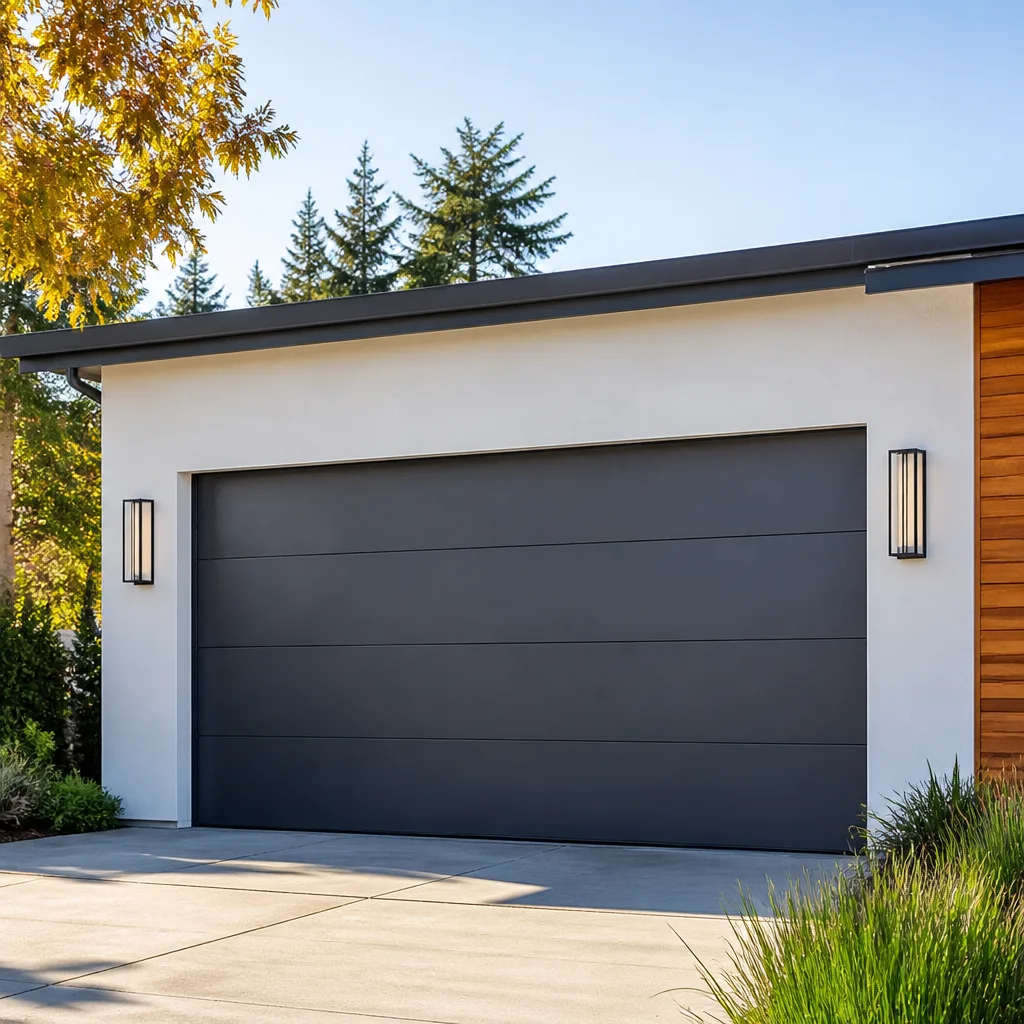 Modern flush
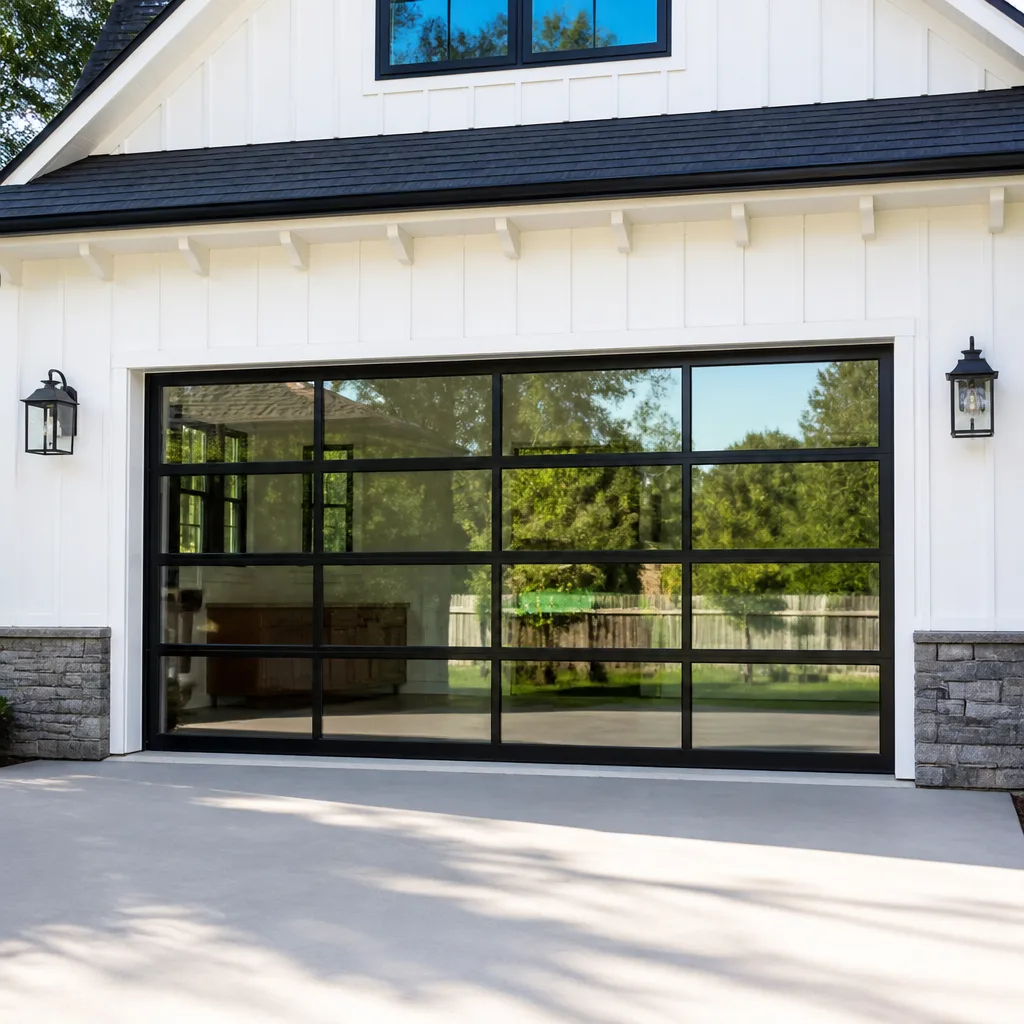 Full-view glass
 LiftMaster openers
 Chamberlain openers
Full 25-point door and opener safety check with every visit - springs, cables, rollers, tracks, and your LiftMaster or Chamberlain opener included
You get a price before we start. It does not change when the pro arrives.
Get your free estimateSeasonal Garage Door Care for Deltona: Year-Round Homeowner’s Guide
Most seasonal garage door advice is written for a place with four real seasons, and Deltona doesn’t have those. What we have is a dry season, a storm season, a hurricane prep window, and a short mild stretch, and each one stresses a garage door differently. The work that matters most isn’t a spring cleaning ritual. It’s the few checks that keep springs, cables, and tracks from being already compromised when a storm rolls in. This guide maps the real calendar here to the tasks that actually protect your door, from January opener tests to post-storm inspections.
Quick Answer
Seasonal garage door care in Deltona comes down to four checkpoints: a pre-season hardware and seal inspection before storm season opens, monthly photo-eye and safety-reverse checks through the summer thunderstorm months, a balance-and-lubrication tune-up during the dry season when cooler air makes doors bind, and a full opener battery backup test in January. Hurricane-season failures usually trace back to wear that built up earlier, not to the wind itself. Handle those four checkpoints and most surprises never happen.
Styles & brands we work with
- Raised-panel steel
- Carriage house
- Modern flush
- Full-view glass
- LiftMaster openers
- Chamberlain openers
Table of Contents
- Why Deltona’s Storm Season Changes the Care Calendar
- The May Pre-Storm Checklist
- How Summer Thunderstorms Affect Photo-Eyes and Sensors
- Dry Season: Why Doors Bind and Gap When It Cools Down
- Post-Storm Inspection: What You Can Check and What Needs a Technician
- The January Task Almost Everyone Skips: Opener Battery Backup
- Monthly Habits That Keep the Whole System Honest
- Season-by-Season Task at a Glance
Why Deltona’s Storm Season Changes the Care Calendar
Garage doors don’t usually fail in a storm because the wind was strong. They fail because something was already worn out when the storm arrived. A spring that’s been cycling thousands of times, a cable with a frayed strand, a track that’s drifted a quarter inch out of plumb: none of those announce themselves on a calm Tuesday. They announce themselves when the door has to work against a stiff gust or when the opener has to push harder than usual.
That’s why the care calendar in Deltona runs on the storm window, not on the traditional spring-and-fall rhythm. The June through September stretch is when the system gets tested hardest. Everything before it is preparation. Everything after it is assessment. The mild months in between are for the routine work that keeps the door from arriving at storm season already tired.
Deltona’s mix of housing adds a wrinkle. Neighborhoods across the city have a wide range of door ages and opener vintages, and a door that’s been quietly aging on a Wayne Dalton or Craftsman system behaves differently from a newer Raynor install. Older hardware benefits from an earlier, more thorough pre-season look. Newer hardware benefits from the same checks but is less likely to have accumulated wear.
Here’s the mental model we use. Think of your door as having four seasonal jobs:
- May: Prepare. Verify hardware, seals, and the manual release before the window opens.
- June through September: Watch. Monthly safety checks through thunderstorm season.
- October: Assess. A post-storm inspection once the active window closes.
- November through March: Maintain. Dry-season tuning as cooler air changes how the door moves.
If you handle those four jobs, you’re doing more for your door than most homeowners do in a decade. If you want a baseline inspection before you start, our garage door repair service covers the full system, not just the part that’s making noise.
The May Pre-Storm Checklist
The single most useful thing you can do for your garage door in Deltona happens in May, before the storm window opens. A thorough pre-season walkthrough takes most homeowners under an hour and catches the problems that would otherwise become storm-season failures. Here’s what to verify.
- Springs and cables. Look at the torsion spring above the door for visible gaps or a stretched look, and inspect the cables along each side for frayed strands. If anything looks off, stop and schedule a service call. Springs and cables are under extreme tension and are the most dangerous parts of the system to touch, so treat any visible damage as a job for a trained technician, not a weekend project.
- Rollers and hinges. Check that rollers turn freely and hinges aren’t loose or cracked. A wobbling hinge is cheap to fix now and expensive to ignore later.
- Weather seal along the bottom. Run your hand along the bottom seal. If it’s cracked, brittle, or not making contact with the floor, it’s letting in rain and heat. Replace it before the summer rains find the gap.
- Track alignment. Open and close the door and watch the tracks. The door should move smoothly without binding or rattling. A track that’s out of alignment stresses the opener on every cycle.
- Manual release. Pull the red release handle with the door closed, then re-engage it. You want to know it works before you need it during an outage. If it’s stiff or won’t re-engage, that’s a service call.
- Photo-eyes. With the door open, wave an object across the safety sensors near the floor. The door should reverse. If it doesn’t, don’t wait until summer to fix it.
That’s the core six. Everything else, from a full opener diagnostic to a balance test, is worth doing during the same visit. If your pre-season look turns up anything you’re not comfortable handling, our Ardent Garage Door Repair team can walk the whole system and give you a written estimate before any work starts.
How Summer Thunderstorms Affect Photo-Eyes and Sensors
Deltona’s summer afternoon thunderstorms do something specific to garage door safety sensors: they knock them out of alignment. The photo-eye system is a pair of small sensors mounted low on each side of the door, and the safety reverse depends on a clean line of sight between them. A hard rain, a gust, a bump from a lawnmower, or a shifting slab can move one sensor a fraction of an inch. That’s enough to make the door refuse to close or reverse the moment it starts down.
You can often tell the difference between a sensor problem and a bigger issue just from the behavior:
- Door reverses immediately after starting down: usually a photo-eye issue. Check for debris, spider webs, or a misaligned sensor.
- Opener light flashes a set number of times: the flash pattern usually points to a safety sensor fault on most LiftMaster and Chamberlain openers. Consult your opener manual for the exact code.
- Door won’t move at all and the opener hums: that’s usually a mechanical issue, not the sensors. Stop and call a technician.
- Door closes partway, then reverses and the sensors look clean: the alignment may still be off. A recalibration is often the fix.
Recalibration is usually a matter of nudging each sensor until the indicator lights on both are steady and the door closes cleanly. What requires a service call: a sensor that won’t hold alignment, a sensor with a damaged lens or cracked housing, a sensor whose wiring has been chewed or pulled, or a safety reverse that fails even with the sensors perfectly aligned. Those are safety issues, not annoyances. A door that won’t reverse is a door that can close on a person or a pet. If your sensors won’t cooperate, our garage door opener repair service covers the full sensor and safety-reverse system. We answer 24/7 at (866) 611-8038, and our fast dispatch from 7am to 7pm, Sunday through Friday, gets a technician out to diagnose it.
Dry Season: Why Doors Bind and Gap When It Cools Down
Here’s a pattern that surprises a lot of Deltona homeowners. A door that ran perfectly all summer starts to bind, squeak, or leave a gap along one side once the dry season settles in. Nothing broke. The door simply changed shape.
Garage doors are made of materials that expand and contract with temperature and humidity. During the humid summer, wood and steel panels swell slightly. When the dry season arrives and the air dries out, those panels shrink back. The result is a door that sat flush in August and now leaves a visible gap at the bottom or rides a little differently on its tracks. In cooler air, hinges and rollers also stiffen, and a door that coasted through the summer suddenly feels heavier.
The dry-season tune-up addresses this. A few minutes each month keeps the system moving evenly:
- Lubricate the moving parts. A garage-door-specific lubricant on hinges, rollers, and the torsion spring coils (never on the tracks themselves) keeps things moving quietly as temperatures drop.
- Check the balance. Disconnect the opener with the manual release and lift the door halfway by hand. It should stay put. If it drifts down on its own, the springs may be losing tension.
- Inspect the bottom seal. A gap that appears in the dry season often means the seal needs replacing, not that the door is broken.
- Listen. A door that squeaks or groans more in cooler weather is asking for lubrication. Don’t ignore it.
Any adjustment to the springs themselves should be left to a trained technician. Torsion springs store tremendous energy, and a mistake on one can cause serious injury. If your dry-season inspection turns up a spring or cable issue, that’s the moment to call. The written estimate sets the price before any work starts.
Post-Storm Inspection: What You Can Check and What Needs a Technician
After a named storm passes through Deltona, the first question is always: is the door safe to use? Some of that you can answer yourself. Some of it you can’t, and shouldn’t try to.
What you can check yourself:
- Visual condition of the door panels. Look for dents, dings, or panels that have shifted.
- Debris in the tracks. Clear anything that’s blown in.
- Photo-eye alignment. Check that the sensors are still square to each other.
- Weather seal condition. A seal full of debris or torn by wind needs replacing.
- The manual release. Make sure it still engages.
What a technician needs to examine:
- Spring condition and tension. A spring that took a sudden jolt may be closer to failure.
- Cable integrity. Frayed strands from a sudden load need to be found.
- Track alignment. A door that pushed against debris or a gust may have drifted out of plumb.
- Opener calibration and safety reverse. The opener may need a full reset after a storm.
- Hinge and roller condition after the door has been forced through a rough cycle.
The simple rule: if you can see it, check it. If it holds tension or moves under force, leave it to a technician. A door that survived the storm isn’t automatically safe to run. Storm damage often hides until the next cycle, and that’s the cycle where it causes trouble. If the inspection turns up anything that concerns you, our Deltona team offers free estimates and works on LiftMaster, Chamberlain, Genie, Clopay, Amarr, Wayne Dalton, Craftsman, and Raynor systems. Call (866) 611-8038 to set one up.
The January Task Almost Everyone Skips: Opener Battery Backup
If we could pick one seasonal task that Deltona homeowners skip more than any other, it’s testing the opener’s battery backup. Many openers installed in the last decade include a backup battery designed to keep the door working during a power outage. The trouble is that the battery sits quietly in the housing for months or years, and nobody thinks to test it until the power is already out and the door won’t move.
That’s the setup for the failure you don’t want: a storm knocks out the power, and the battery that would have opened the door is dead. Test it once a year. January is a good spot on the calendar because storm season is months away and you have plenty of time to replace a dead battery before you’d actually need it.
Testing is straightforward. With the door closed, unplug the opener from the wall. Press the opener button. If the door opens, the battery is doing its job. If nothing happens, the battery needs replacing. Plug the opener back in and note it on your calendar for next January.
While you’re in the opener, check for the small indicator light on the battery backup unit that most openers include, and read your manual for how it signals low battery. LiftMaster and Chamberlain openers both use similar indicator patterns. If you’re not sure what your opener is telling you, our opener repair service can identify it in a single visit. Garage doors and openers are all we do, so we know these systems cold. Call (866) 611-8038 and we’ll get you on the schedule. Same-day repair is often possible.
Monthly Habits That Keep the Whole System Honest
Between the seasonal milestones, a handful of small habits keep your door from drifting out of health without anyone noticing. None of them take long. All of them build the kind of familiarity that makes a real problem obvious before it becomes a failure.
- Watch the door close, once a month. Stand back and let it run. You want to see it move evenly. A hitch, a wobble, or a hesitation is the earliest sign of trouble.
- Test the safety reverse. Place an object in the door’s path while it’s closing. The door should reverse. If it doesn’t, stop using the door and call a technician.
- Clear the tracks. A quick visual sweep once a month keeps debris from building up. Never use grease on the tracks themselves; keep them clean and dry.
- Look at the seal. A cracked or torn bottom seal is a simple fix that gets harder to ignore the longer it goes.
- Listen on the way out. Squeaks, groans, and rattles are early warnings. Note when they started.
The goal isn’t to turn every homeowner into a technician. It’s to notice the small changes before they compound. A door that starts making a new noise in July is telling you something. The homeowner who listens gets a repair; the one who doesn’t usually gets a replacement.
Season-by-Season Task at a Glance
Here’s the full calendar in one place so you can plan around it. Print it, screenshot it, or stick it on the wall next to the opener.
- January: Opener battery backup test. Check the safety reverse. Schedule anything that turned up in the test.
- February through April: Dry-season tune-up. Lubricate moving parts. Check the balance. Inspect the bottom seal.
- May: Pre-storm checklist. Springs, cables, rollers, hinges, weather seal, track alignment, manual release, photo-eyes.
- June through September: Monthly photo-eye and safety-reverse checks. Watch for sensor faults after storms. Keep the tracks clear.
- October: Post-storm inspection. Self-check what’s visible. Call for what holds tension or moves under force.
- November through December: Rest and prepare. Address any minor issues found in the October inspection before the cool months set in.
The value in this calendar isn’t the tasks themselves. It’s the sequence. Everything before storm season is preparation; everything after is assessment. That’s the rhythm that keeps a Deltona door from arriving at June already worn out.
Common Mistakes to Avoid
- Treating the dry season as maintenance-free. Doors contract in cooler weather and start to bind or gap, and the homeowner who skipped the tune-up is the one calling in January about a door that suddenly won’t close.
- Ignoring a sensor fault until the door won’t close. Photo-eye issues are usually a minor fix. A safety reverse that fails to engage is a genuine safety problem, and it’s the kind of thing you want to catch before it matters.
- Assuming a post-storm door is safe because it opens. Storm damage to springs and cables often hides until the next cycle. A visual inspection of the tension-bearing parts is worth the time.
- Never testing the opener battery backup. The battery dies quietly and the failure shows up at the worst moment. Test it once a year, ideally in January.
- Oiling the tracks. Tracks should stay clean and dry. Grease on the tracks collects debris and makes the door harder to move.
- Forcing a binding door. A door that won’t close is usually telling you something. Forcing it stresses the opener, the springs, and the tracks. Diagnose first.
- Handling spring or cable work yourself. These are the most dangerous parts of the system. Even a small adjustment on a torsion spring is a job for a trained technician.
See the difference
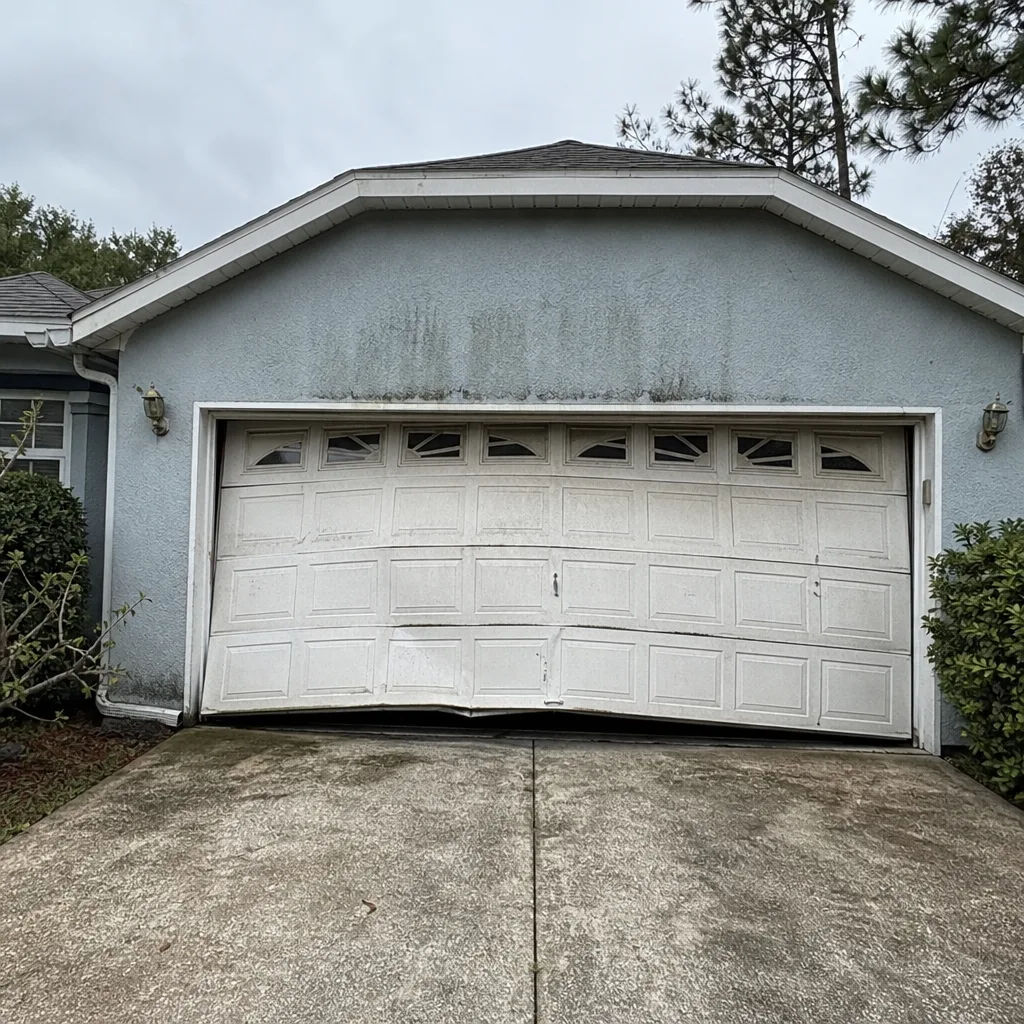 Before
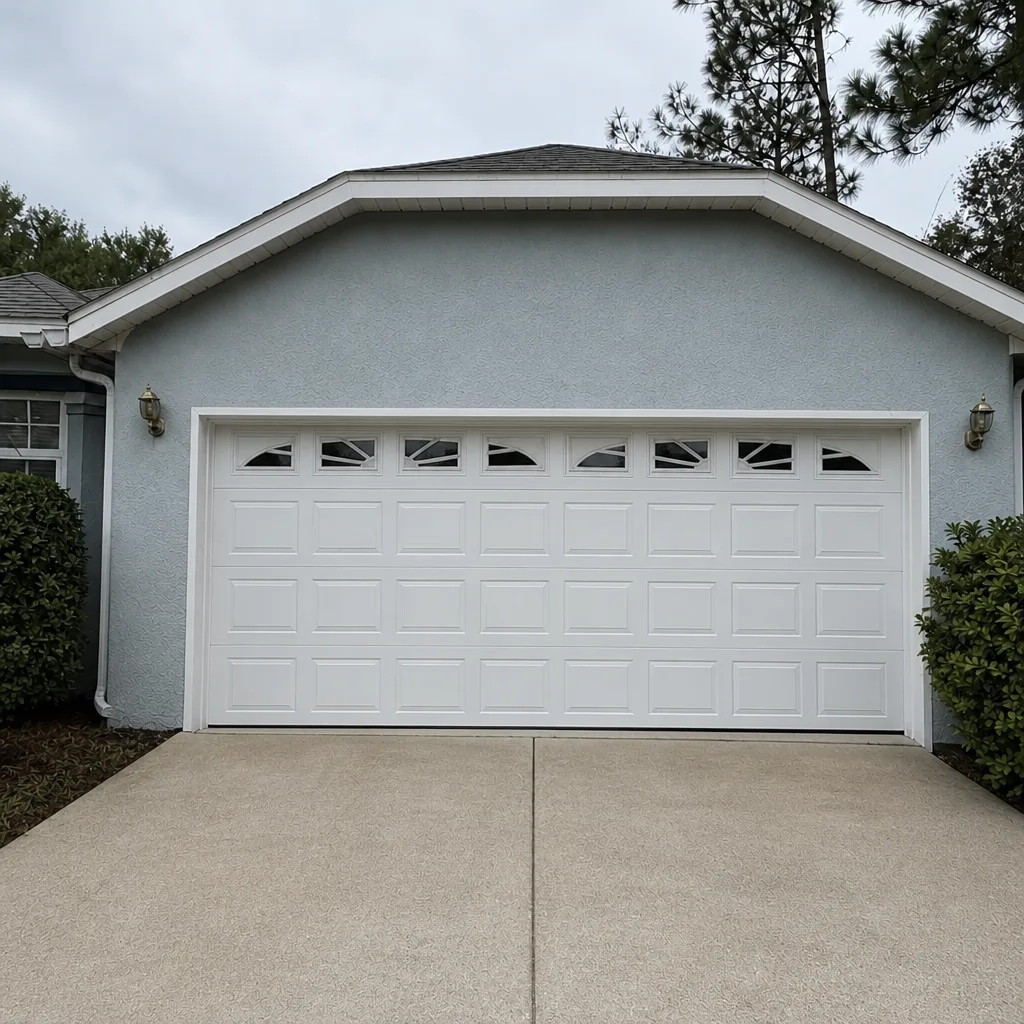 After
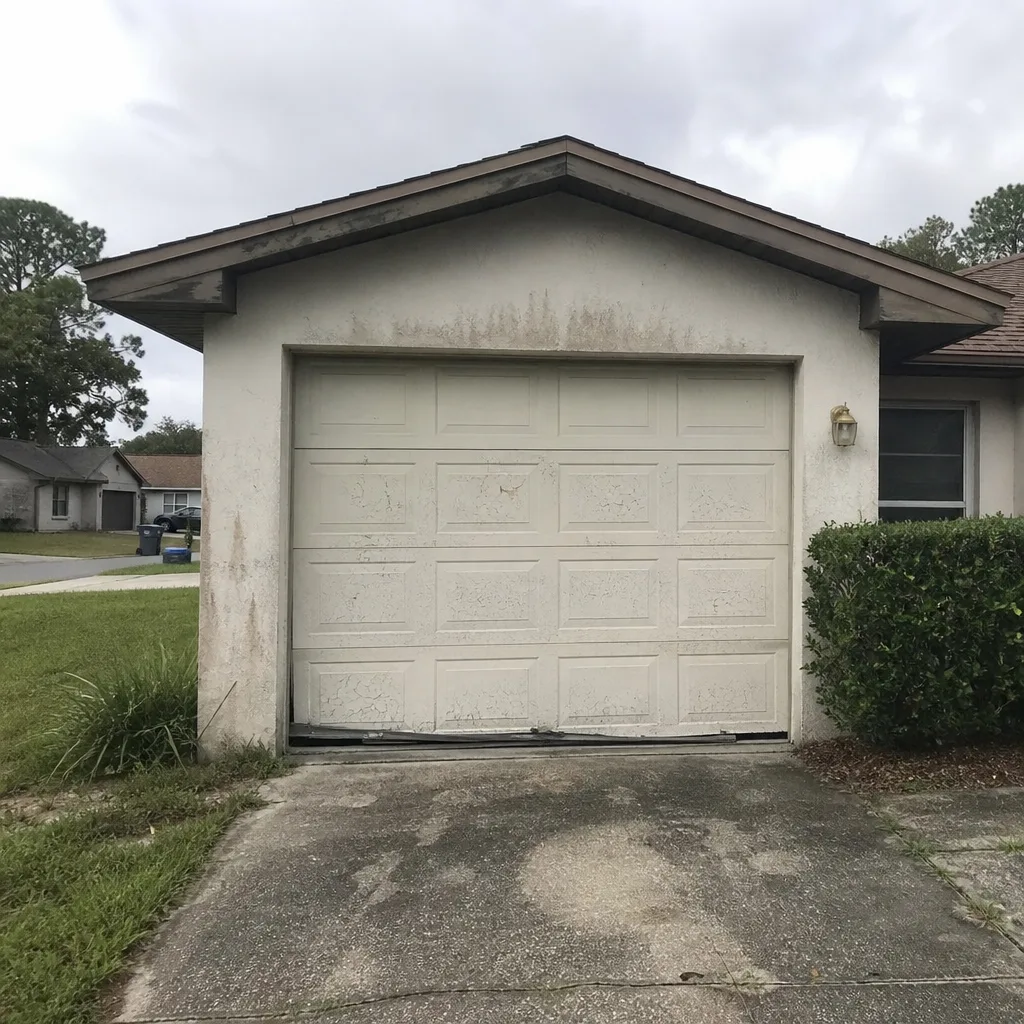 Before
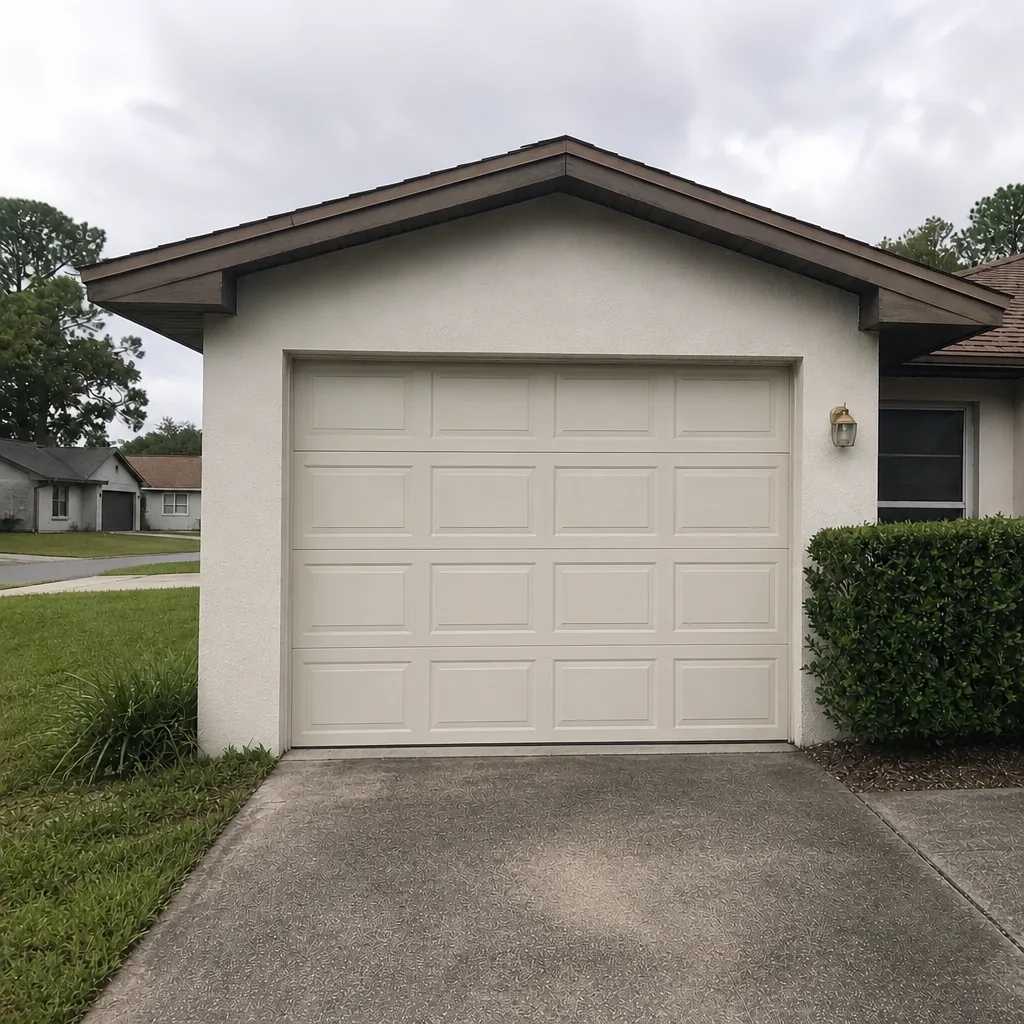 After
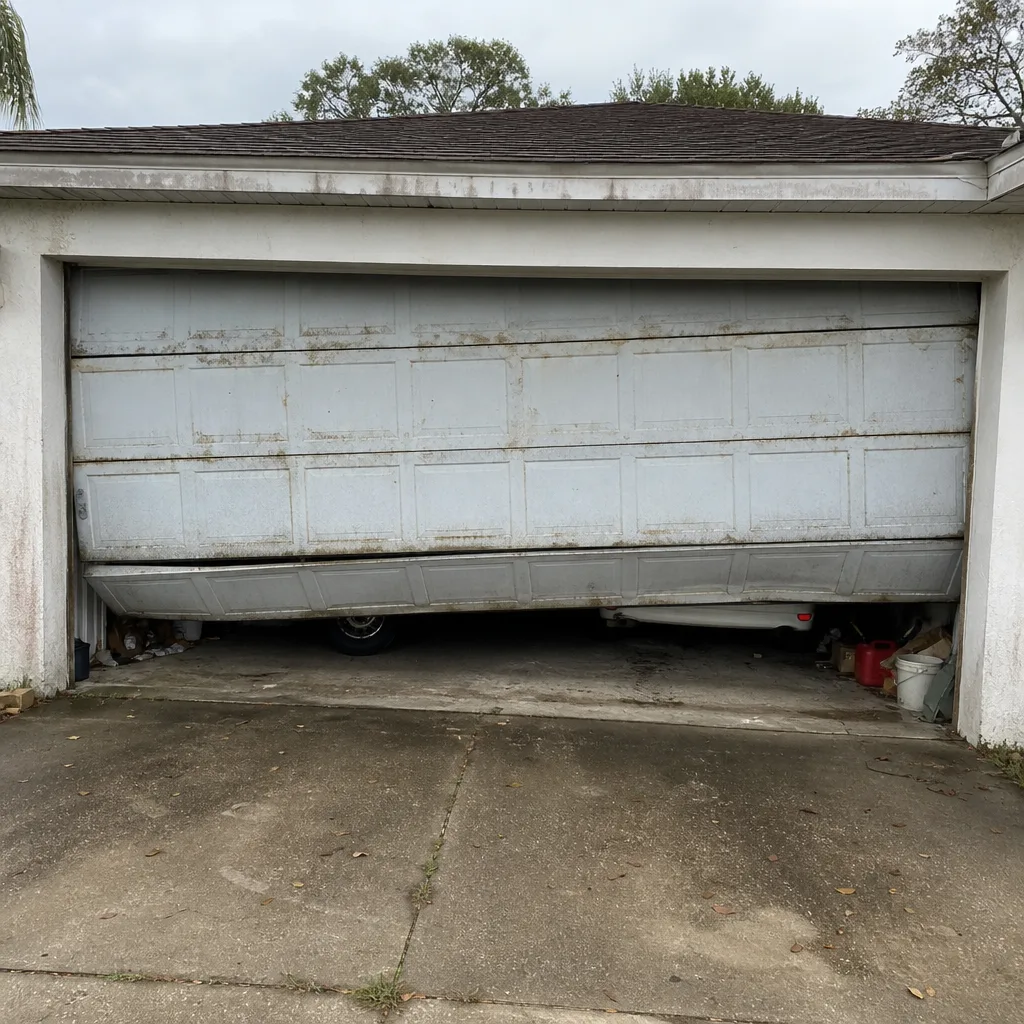 Before
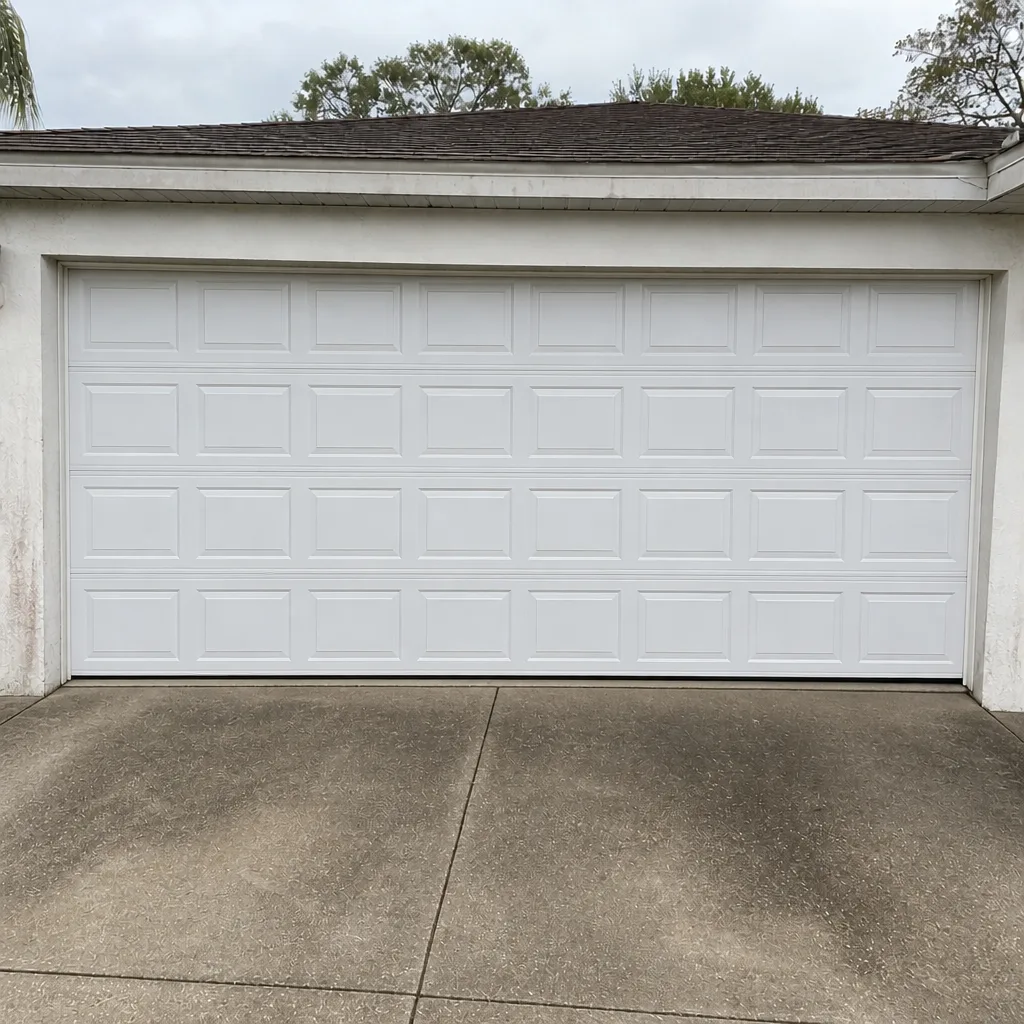 After
When to Call a Professional
Some seasonal tasks are meant for you. Others are meant for someone with the tools and training to handle tension-bearing hardware safely. Call a technician when:
- A spring looks stretched, gapped, or has stopped holding the door’s weight.
- A cable has any visible fraying or looseness.
- The door is out of balance when you lift it manually.
- The opener hums but the door doesn’t move.
- The safety reverse fails to engage.
- A track is bent, or the door has drifted out of alignment.
- Anything about the door’s behavior changed after a storm.
Ardent Garage Door Repair offers free estimates in Deltona – call (866) 611-8038. We answer 24/7, and with fast dispatch from 7am to 7pm, Sunday through Friday, we can get a technician out to diagnose what’s going on and give you a written price before any work begins. Our technicians have up to 12 years of experience, and we work on the brands you actually own: Wayne Dalton, Craftsman, Raynor, LiftMaster, and the rest of the major manufacturers.
Frequently Asked Questions
Once a year for a full inspection and tune-up, plus monthly safety checks in between. In Deltona’s climate, the best time for the annual service is the pre-storm window in May, so any worn hardware gets caught before the storm season opens.
Because the materials contract as the air dries out in the dry season. Panels shrink back, hinges and rollers stiffen, and the door that sat flush in August suddenly leaves a gap or rides a little differently. A dry-season lubrication and balance check usually resolves it.
Yes. The backup battery is the part of the system most likely to be dead when you actually need it. Test it once a year, ideally in January, by unplugging the opener with the door closed and pressing the opener button.
Start with what you can see: door panels, tracks, seal condition, and photo-eye alignment. Leave spring and cable inspection to a technician. Storm damage to tension-bearing parts often hides until the next cycle, so a visual pass from a trained eye matters.
Yes, on the moving parts like hinges, rollers, and torsion spring coils. Not on the tracks. Use a garage-door-specific lubricant. Never adjust a tension spring yourself; that’s a job for a trained technician because of the stored energy.
We work on LiftMaster, Chamberlain, Genie, Clopay, Amarr, Wayne Dalton, Craftsman, and Raynor, plus most other major brands. We service the full system, from opener to panel. Call (866) 611-8038 to schedule a free estimate.
The Bottom Line
The seasonal care that matters most in Deltona follows the climate, not the calendar on the wall. Test your opener battery backup in January. Do a dry-season tune-up through the cool months. Run the May pre-storm checklist before the window opens. Watch your photo-eyes through the thunderstorm months, and do a full post-storm inspection once the active season closes. That rhythm catches problems when they’re small. It also means you never get caught with a compromised door when a storm rolls through. If anything on the checklist turns up something you’re not comfortable handling, call us. The price is set by the written estimate before any work starts, and the estimate is free.
Call (866) 611-8038 for a free estimate. We answer 24/7. Fast dispatch from 7am to 7pm, Sunday through Friday.
Written by the team at Ardent Garage Door Repair.