
Last updated November 15, 2026
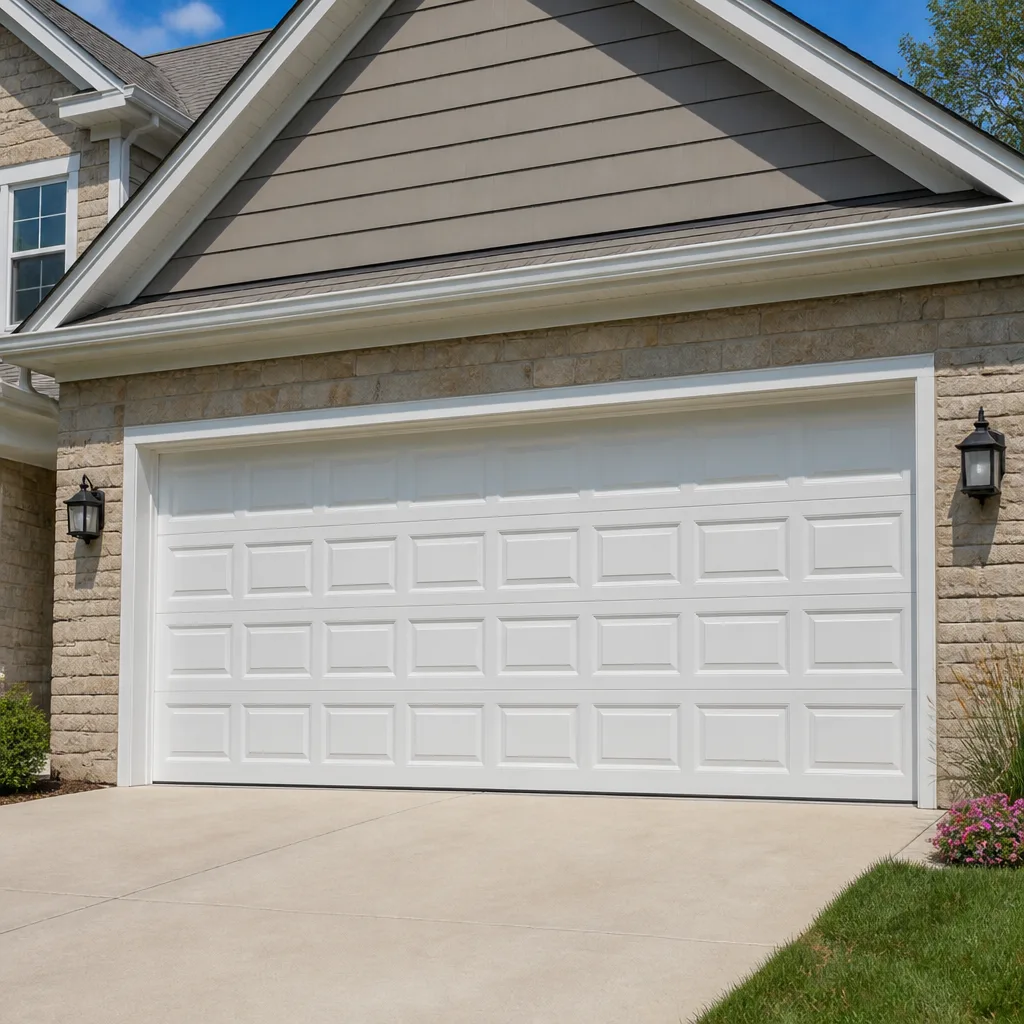 Raised-panel steel
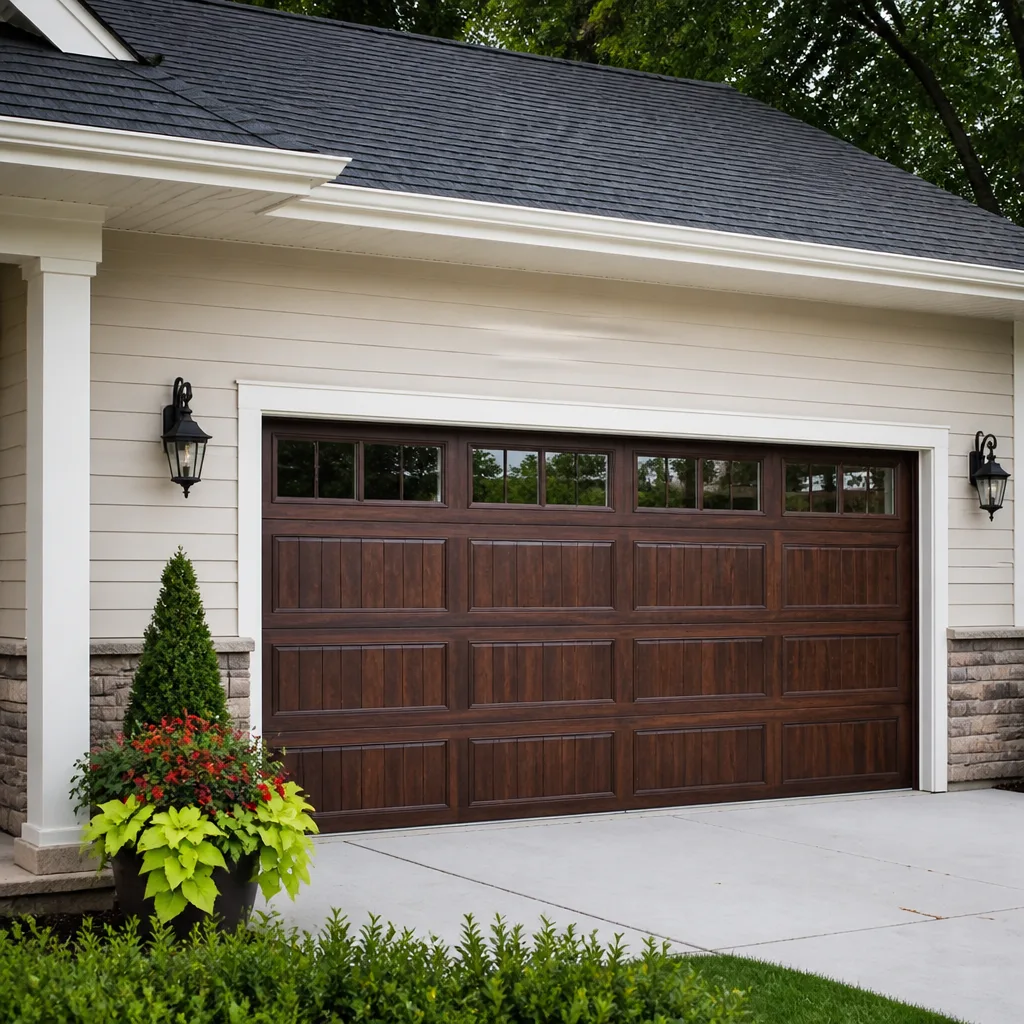
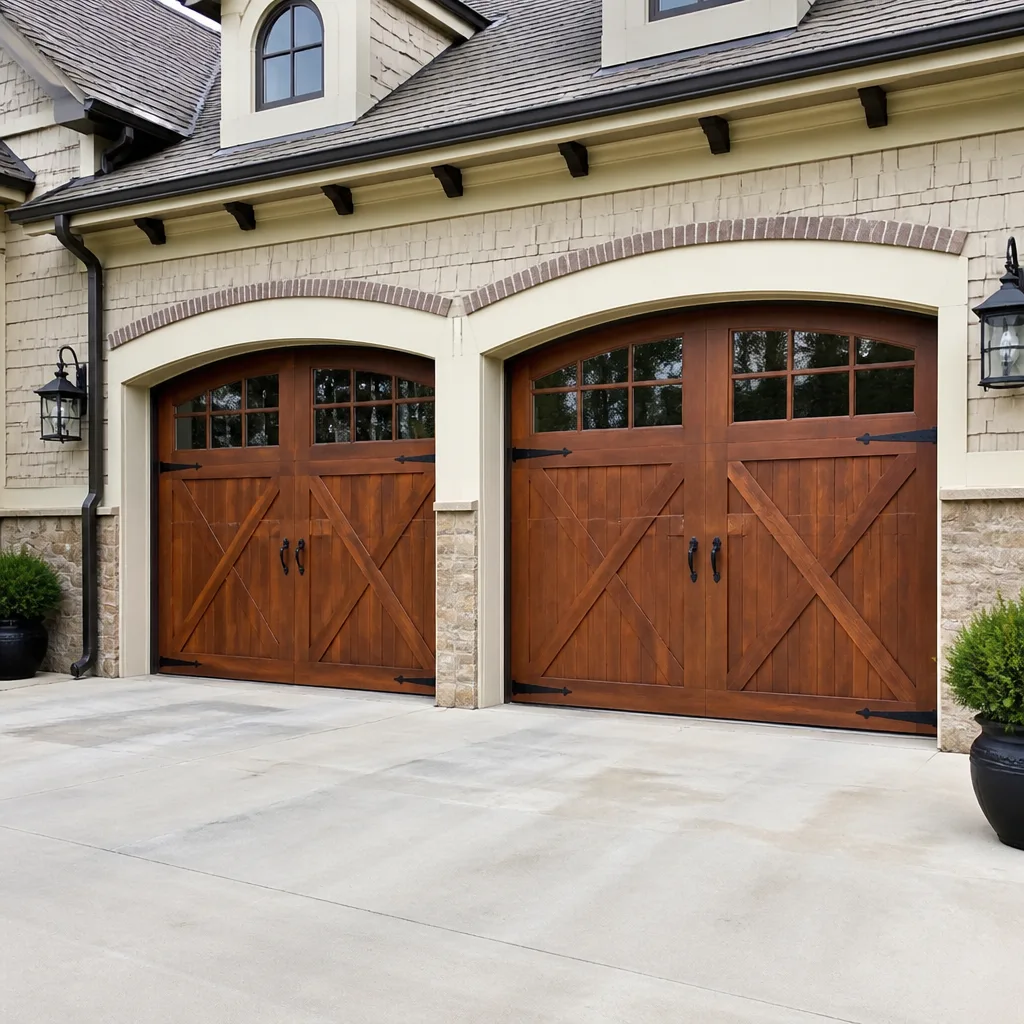 Carriage house
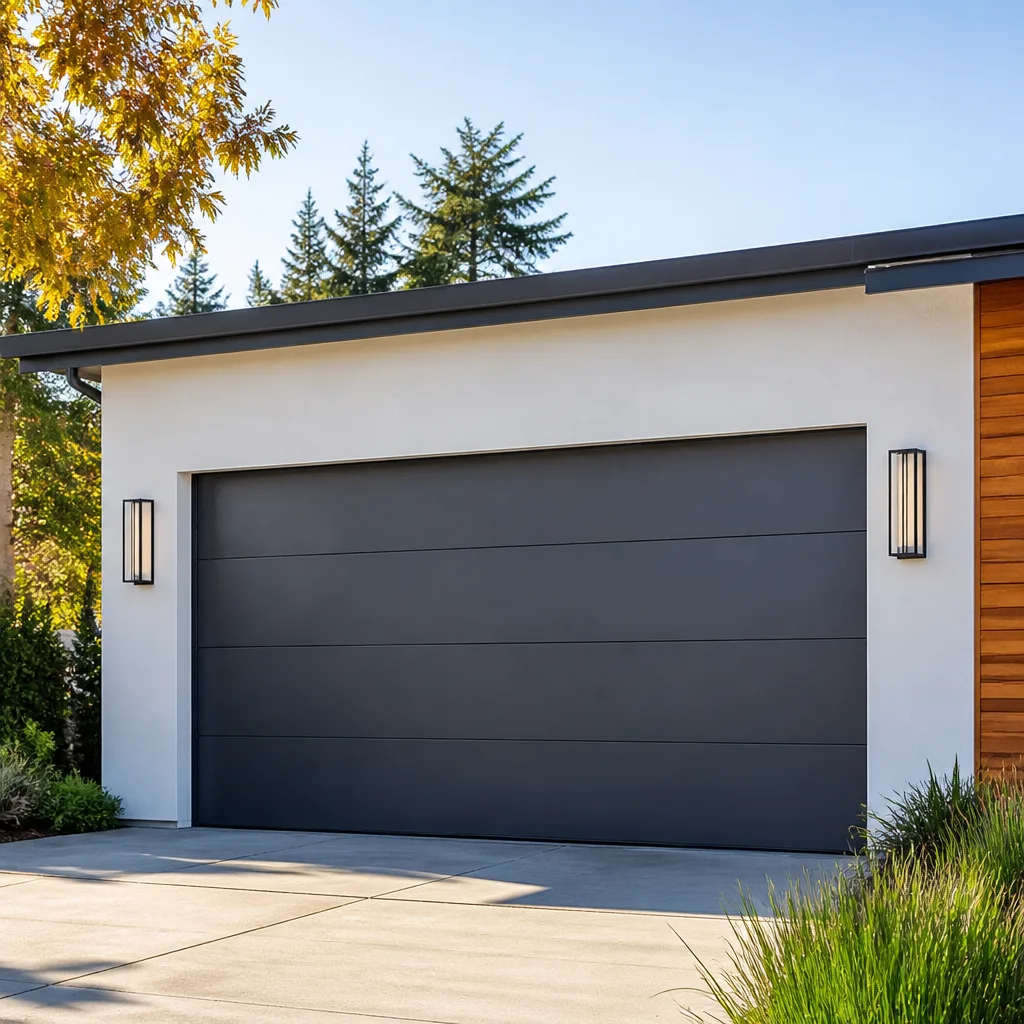 Modern flush
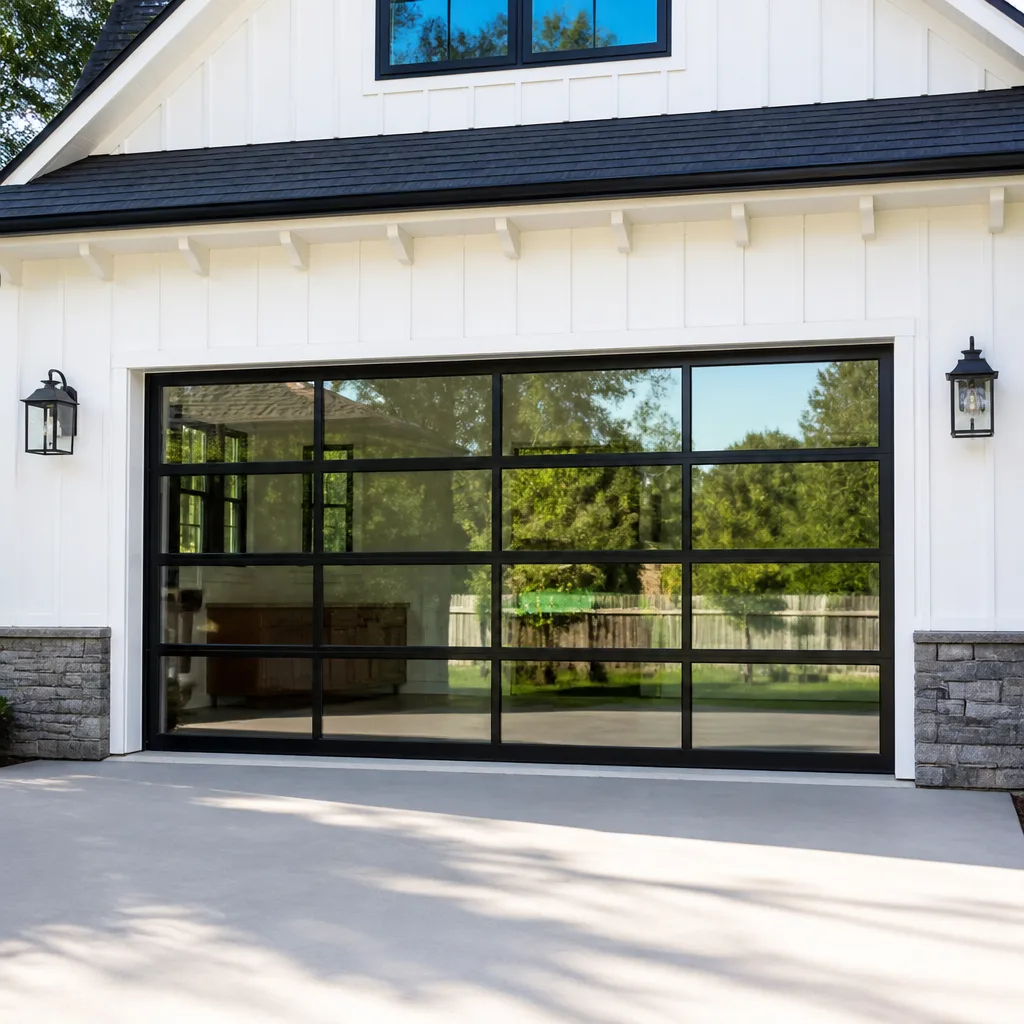 Full-view glass
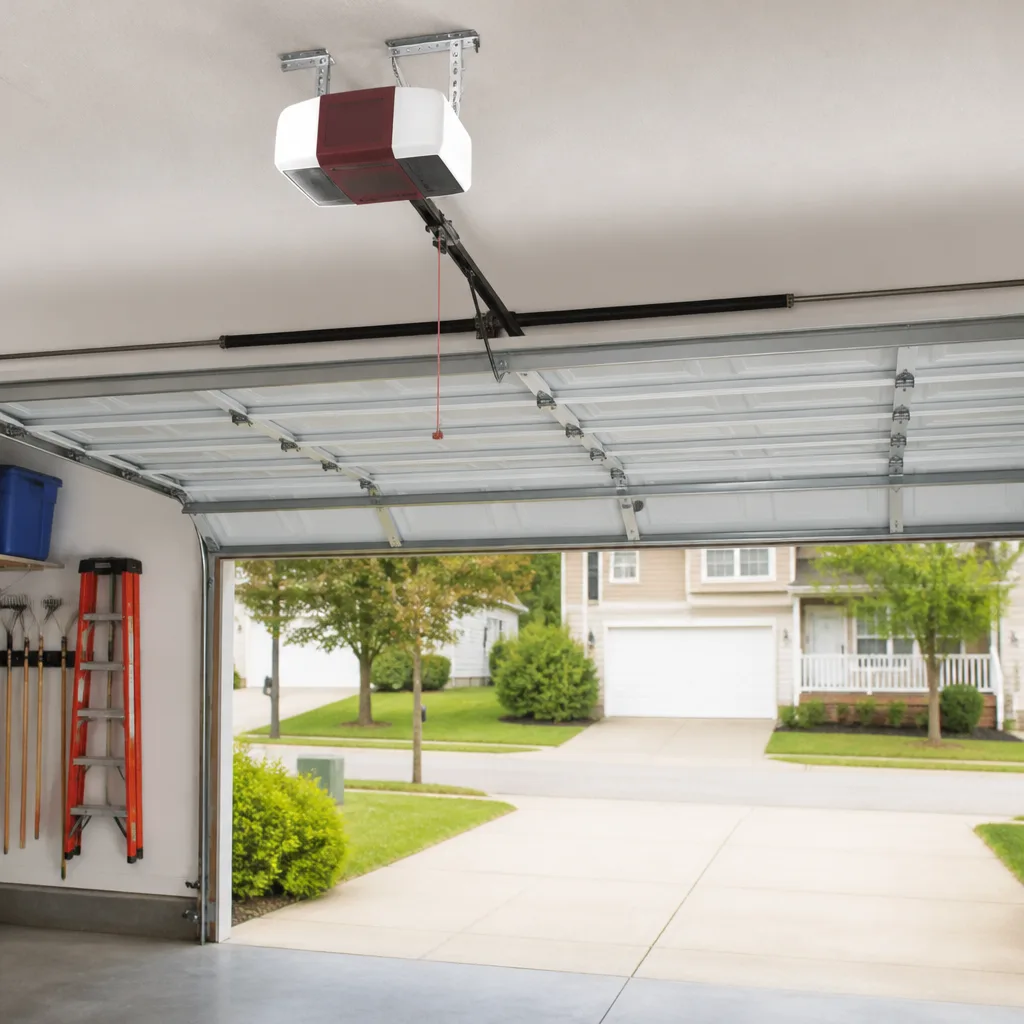 LiftMaster openers
 Chamberlain openers
Full 25-point door and opener safety check with every visit - springs, cables, rollers, tracks, and your LiftMaster or Chamberlain opener included
You get a price before we start. It does not change when the pro arrives.
Get your free estimateGarage Door Emergency Preparedness Guide for Deltona Homes
During Hurricane Ian’s power outage footprint, thousands of Central Florida homeowners discovered their battery backup openers were either dead or had never been tested, and their manual release cord either jammed or they didn’t know where it was. That’s the part most hurricane prep skips. You board windows, fill water jugs, charge phones, and then the grid goes down for days and your car is trapped behind a door you can’t lift. Deltona sits squarely in that storm corridor, so this guide treats your garage door as emergency equipment, not a home improvement project. You’ll learn how to release your door by hand, which openers survive a multi-day outage, how wind ratings work, how to lock a dead door, and how to document damage before anyone touches it.
Quick Answer
To prepare your garage door for a Deltona storm or prolonged power outage, learn and practice the manual release on your specific opener, confirm whether your battery backup actually holds up for a multi-day outage, verify your door’s wind rating against Volusia County code, and have a plan to lock and secure the door if the opener fails. Test all of it while the power is still on, not during the storm.
Styles & brands we work with
- Raised-panel steel
- Carriage house
- Modern flush
- Full-view glass
- LiftMaster openers
- Chamberlain openers
Table of Contents
- How Do You Manually Release a Garage Door?
- Does Your Battery Backup Opener Actually Work?
- How Do You Check Your Door’s Wind Load Rating?
- How Do You Secure a Door When the Opener Fails?
- Post-Storm Damage Documentation Checklist
- Pre-Season Garage Door Prep Checklist
- Why the Same Door Fails Every Storm Season
How Do You Manually Release a Garage Door?
The manual release disconnects your door from the opener so you can lift it by hand. On nearly every residential opener, it’s a red cord or handle hanging from the carriage assembly at the top center of the door. Pull it straight down toward the door, and the trolley disconnects. The trick is that on many doors you have to pull it at a slight angle toward the opener motor, not straight down, to get the carriage to slide free. Homeowners who’ve never practiced this discover the difference in the dark.
The cord location varies a little by brand, and Deltona homes run the full spread of older and newer systems:
- LiftMaster and Chamberlain: red T-handle or cord hanging from the trolley near the motor. Newer models sometimes use a lockout that requires the door to be fully closed first.
- Genie: red cord on the carriage; on screw-drive units the release can feel stiff and may need a firmer pull.
- Raynor: release usually hangs from the operator rail; confirm the exact spot on your model before you need it.
Here’s the sequence worth practicing once a year, with the power on and the door closed:
- Stand clear of the door’s path and make sure no one is underneath.
- Pull the red release handle firmly toward the door and slightly toward the motor until you hear or feel the carriage click free.
- Lift the door by hand. A healthy door should rise with steady, even resistance – not a fight, not a slam.
- Lower it slowly. A door that drops fast or feels dangerously heavy has a spring problem, and that’s a stop-and-call situation, not a workout.
- To reconnect, run the opener until the carriage lines up with the trolley, then push the release back into place and test a full cycle.
If your door won’t lift by hand at all, or lifts and then crashes down, do not force it. High-tension torsion springs and the cables under them store enough energy to cause serious injury, and they’re the one part of this system you should never adjust yourself. That’s a trained-technician job. When a door in Deltona needs garage door repair, a failed spring is the most common culprit, and it makes manual operation unsafe until it’s fixed.
Does Your Battery Backup Opener Actually Work?
Most battery backup openers are rated for a limited number of open-close cycles, not a fixed number of days. In practice, plenty of them manage somewhere around a dozen full operations before the battery is spent – open, close, that’s it. A Deltona outage that runs three to seven days will outlast a battery backup fast if you’re cycling the door every time someone leaves. This is the distinction that catches homeowners off guard: battery backup is designed for getting your car out once or twice during an outage, not for running the door like normal for a week.
The other reality is that batteries age quietly. A backup battery that sat untouched for a couple of years can be dead when you need it, and the opener won’t tell you until the power’s already out. Here’s how to check yours honestly:
- Find the test button on your opener or battery unit. LiftMaster and Chamberlain units usually have one on the battery pack; Genie and Raynor setups vary by model, so check your manual or the unit itself.
- Kill the power at the breaker, not the wall switch, so you’re testing the real battery condition. Open and close the door a few times and note how many cycles you get before it slows or stalls.
- Replace aging batteries on a schedule you’ll actually remember – before hurricane season each year is the simplest rule.
- Count your realistic cycles. If you have two cars and a household of drivers, a dozen operations won’t cover a week. Plan to use the manual release for routine trips and save the battery for real emergencies.
In our experience, the openers that hold up best through a long outage are the ones whose backup batteries were replaced and tested within the past year. That’s it. Brand matters less than maintenance. If your opener’s backup has never been tested or the unit is old enough that you’re not sure it has one, our garage door opener repair team can check it, replace the battery, or recommend a unit that fits how you actually use the door in Deltona.
How Do You Check Your Door’s Wind Load Rating?
Your garage door is the largest opening in your home’s wind envelope, and in a hurricane corridor it’s also one of the most vulnerable. When wind pressure forces a garage door inward, the pressure has nowhere to go but into the house, and that’s how a single failed door can compromise a whole structure. Volusia County’s building code requires garage doors rated for the local design wind speed, and the rating is printed on a label on the door or on a sticker inside the track.
You can do a preliminary check yourself without hiring an inspector:
- Find the rating label. Look along the door’s edge, on the end stile, or on a sticker affixed to the track or jamb. It will list a wind pressure or design pressure rating.
- Compare it to the design wind speed for your area. Volusia County’s building department can confirm the required wind speed for your address. Code requirements depend on location and construction date, so don’t guess from a neighbor’s door.
- Check for a permit history on the door. If the door was replaced, a permit record tells you when and to what standard. Your city or county can pull that.
- Look at the mounting. Rated door or not, the hardware, tracks, and hinges have to be anchored properly. Rusted or loose brackets undercut a good rating.
- Ask a pro to confirm. A specialist can read the rating, check the anchoring, and tell you plainly whether the door meets code for Deltona and what your options are if it doesn’t.
If the label is missing or unreadable, that alone is worth a professional look. Older doors in Deltona neighborhoods can predate current wind requirements, and a door that was fine when it was installed may not meet the standard that applies now. Most cities require a permit for door replacement, so any upgrade should go through the proper channels – ask the building department what applies to your address before work starts.
How Do You Secure a Door When the Opener Fails?
If your opener dies, the door is stuck, and a storm is coming, your priority shifts from opening the door to keeping it shut and secure. A door that’s down but disconnected from a dead opener can still be lifted from the outside by anyone who knows how, so a failed opener is also a security gap. The fix is mechanical: manually lock the door from the inside so it can’t be raised, and leave it locked until the opener is repaired.
What to do, in order:
- Leave the door fully closed and pull the manual release only to confirm the door is resting down and the carriage is disengaged. If it was already disengaged, re-engage it so the door is held by the opener’s carriage.
- Install or engage a manual lock. Most garage doors have provisions for a slide-bolt or deadbolt-style lock, and many older doors already have one installed. Lock it through the track or into the jamb so the door can’t be lifted.
- Add a secondary barrier if you have one. A door brace or a bar across the inside is a low-cost way to resist pressure and prevent the door from being pushed in or out.
- Keep the car inside if the door is secure and the storm is coming. If the door is unstable, move the car out while you can.
- Verify from the outside that the door can’t be raised, then leave it be until a technician looks at the opener.
A word on safety: if the door is sagging, the panels are bent, or the cables look slack or damaged, don’t try to force a lock into alignment. A compromised door under tension is dangerous, and the panels and cables carry stored energy. Call for help rather than working around damage. If a storm has passed and you’re dealing with a locked-out or jammed door in Deltona, Ardent Garage Door Repair can get it working again, and we work on the brands you actually own – Raynor, LiftMaster, Chamberlain, Genie, and the rest.
Post-Storm Damage Documentation Checklist
Before anyone touches a damaged door, photograph it. Insurance claims for storm damage go smoother when you can show what the door looked like before repairs, and once a technician starts disassembling a bent door, that record is gone. This is the order that keeps your claim clean:
- Wide shots first. Photograph the entire door and opening from a few angles, with the house and surroundings visible so the context is clear.
- Close-ups of damage. Panels, dents, bent tracks, displaced hinges, frayed cables, and any water intrusion around the opening.
- The rating label and any stickers. If the label survived, photograph it. It documents what the door was rated for.
- The opener and its mounting. Photograph the motor unit, the rail, and the bracket where it attaches to the ceiling. Storm movement can pull hardware loose.
- Serial numbers and model numbers on the door and the opener. This speeds up any replacement and proves what you had.
- Date and time stamps. Most phones do this automatically – confirm it’s on so the timeline is clear.
- Do not repair or discard anything until your insurer has seen the photos. Temporary securing for safety is fine; permanent repair before documentation is not.
Then call your insurer, tell them what you photographed, and ask what they need next. Keep the photos until the claim closes. Volusia County homeowner policies vary, so a quick call to your agent about documentation requirements is worth the five minutes. If you’re not sure whether damage is cosmetic or structural, get an estimate before filing if you prefer – a free written estimate gives you something concrete to work with.
Pre-Season Garage Door Prep Checklist
The best time to find out your door isn’t ready for storm season is months before it, when the power is on and the weather is calm. This checklist takes an afternoon and covers the failures we see most often in Deltona:
- Test the manual release with the door closed, as described above. If the cord is missing or jammed, fix it now.
- Test the battery backup at the breaker, and replace the battery if you’re not sure of its age.
- Inspect springs and cables visually – look for rust, fraying, or slack. Never adjust or touch them yourself.
- Check the weather seal at the bottom of the door and replace it if it’s cracked. A good seal keeps wind-driven rain out and keeps pressure from leaking through the opening.
- Confirm your wind rating and check the label is legible and the hardware is tight.
- Test the auto-reverse safety feature by placing a roll of paper towels under the door and confirming it reverses on contact. That function matters year-round, not just before a storm.
- Write down your door and opener model numbers and keep them somewhere you’ll find them. You’ll want them for a replacement or a claim.
If any of this turns up a problem you can’t fix safely – a heavy door, a release that won’t disengage, a backup that holds no charge – that’s the moment to schedule a checkup, while there’s still time before a storm. Our technicians have up to 12 years of experience with the openers and doors in this area, and we’re familiar with how the systems in Deltona homes are set up, whether it’s a LiftMaster, Chamberlain, Genie, or Raynor unit.
Why the Same Door Fails Every Storm Season
A garage door that acts up every time the weather turns usually isn’t unlucky. It’s telling you the same few parts are at the end of their useful life, and the symptom shows up as a jam, a slow or noisy cycle, or a door that won’t close all the way. The most common repeat offenders in Deltona homes:
- Weakening springs. Springs wear with every cycle, and the wear shows up as a door that’s suddenly harder to lift or that doesn’t stay where you leave it. Storm-season heat and humidity don’t help, but the spring is usually the real cause.
- Aging batteries. A backup battery that’s never been replaced will fail in the same way every outage, usually right when you need it.
- Loose hardware and worn rollers. Loose brackets and worn rollers let the door shift in the tracks, and that shows up as a jam or a door that hangs.
- Worn weather seal and gaps. A cracked seal lets rain and wind pressure into the opening, and the wear compounds each season.
- An opener that’s simply past its service life. Motors and drive components wear out. When repairs start stacking up, replacing the unit can be the cheaper path over a few years.
Our advice is to fix what’s actually failing rather than wait for the next outage to expose it. That’s the core of how we approach Deltona garage door work – diagnose the specific part, explain what it will take, and give you a straight answer on repair versus replacement. Garage doors are all we do, so the diagnosis isn’t a guess.
Common Mistakes to Avoid
- Never pull the manual release while the door is under tension and standing open. Release it with the door closed, or you can send a heavy door crashing down. This is the single biggest manual-release mistake.
- Don’t trust an untested battery backup. A backup that’s never been tested is a guess, not preparation. Test it at the breaker before hurricane season each year.
- Don’t force a jammed door. Tripping the opener or wrenching a stuck door can bend tracks and panels or snap a cable, and cables under tension are dangerous. Stop and call.
- Don’t adjust or touch the springs. Torsion and extension springs store enormous energy and are the most hazardous part of the system. This is a trained-technician job, every time.
- Don’t start repairs before you photograph the damage. Once a bent door is disassembled, your insurance documentation is gone. Wide shots, close-ups, labels, and serial numbers, before anything moves.
- Don’t assume an old door meets current code. The rating label matters. A door installed years ago may not meet the wind requirement that applies in Volusia County today, and the building department is the source to confirm it.
- Don’t leave a dead opener as a security gap. A door that’s down but unlocked can be lifted from the outside. Secure it with a manual lock until the opener is working again.
See the difference
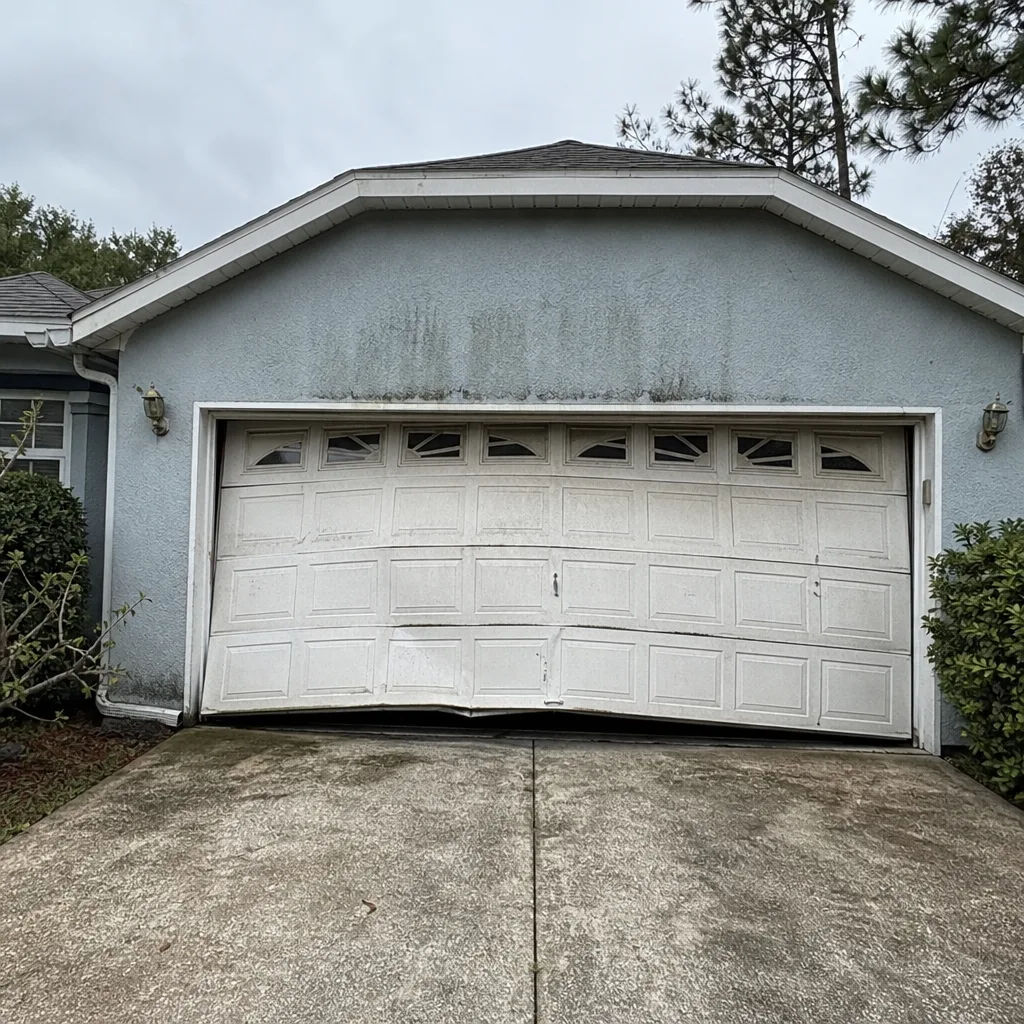 Before
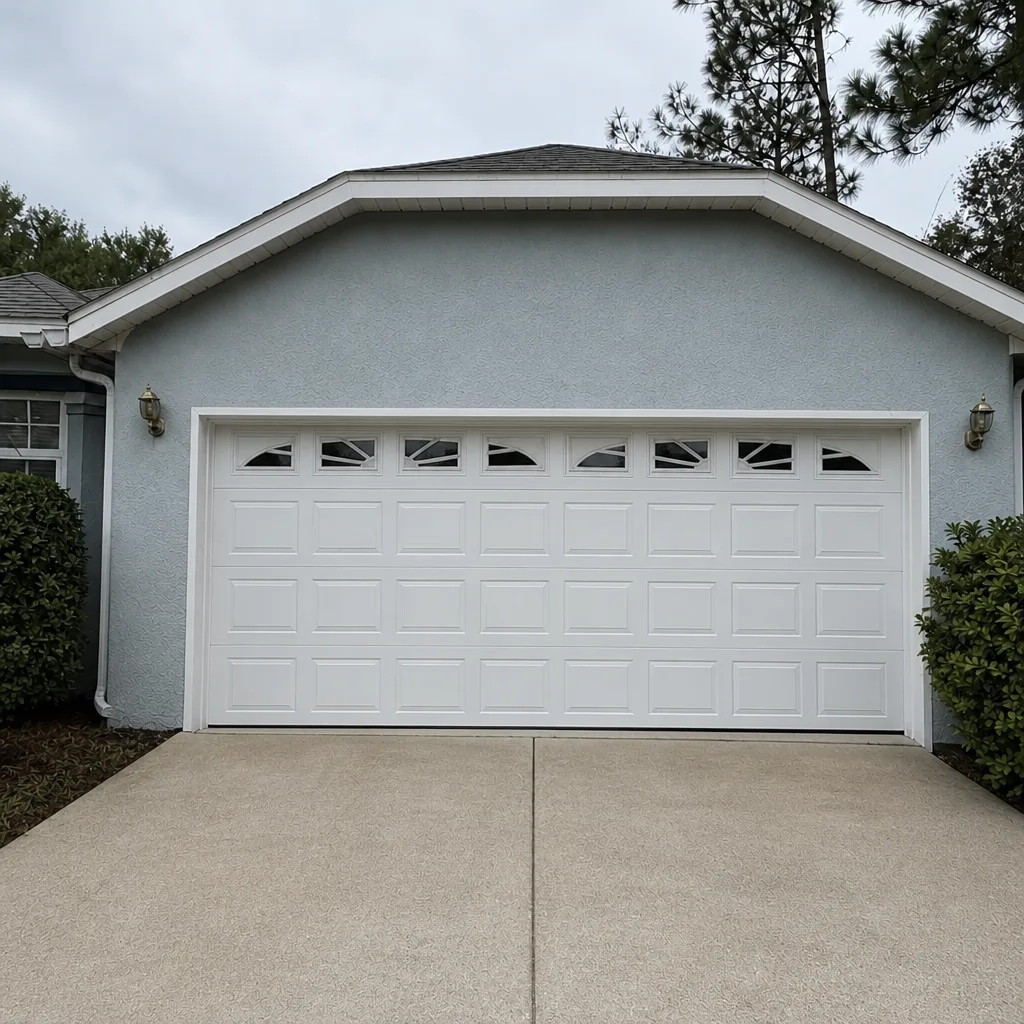 After
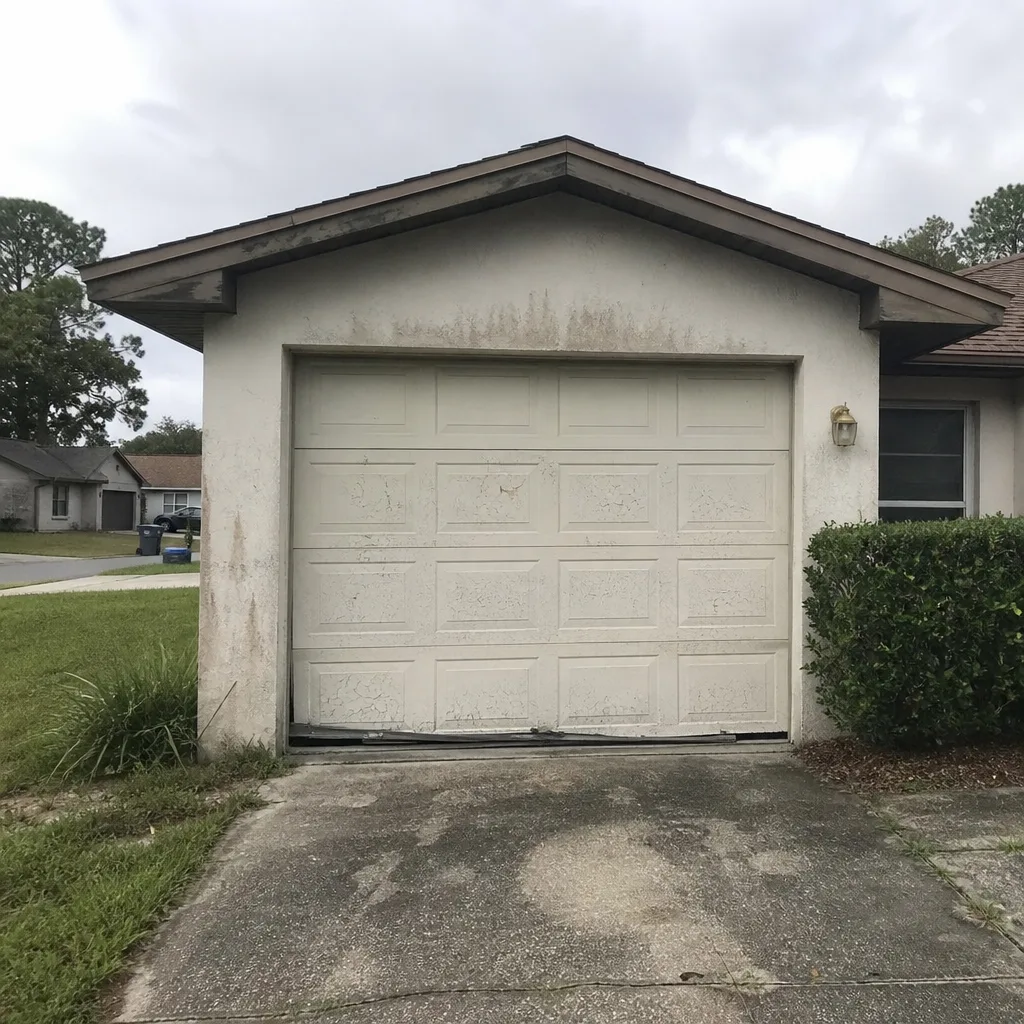 Before
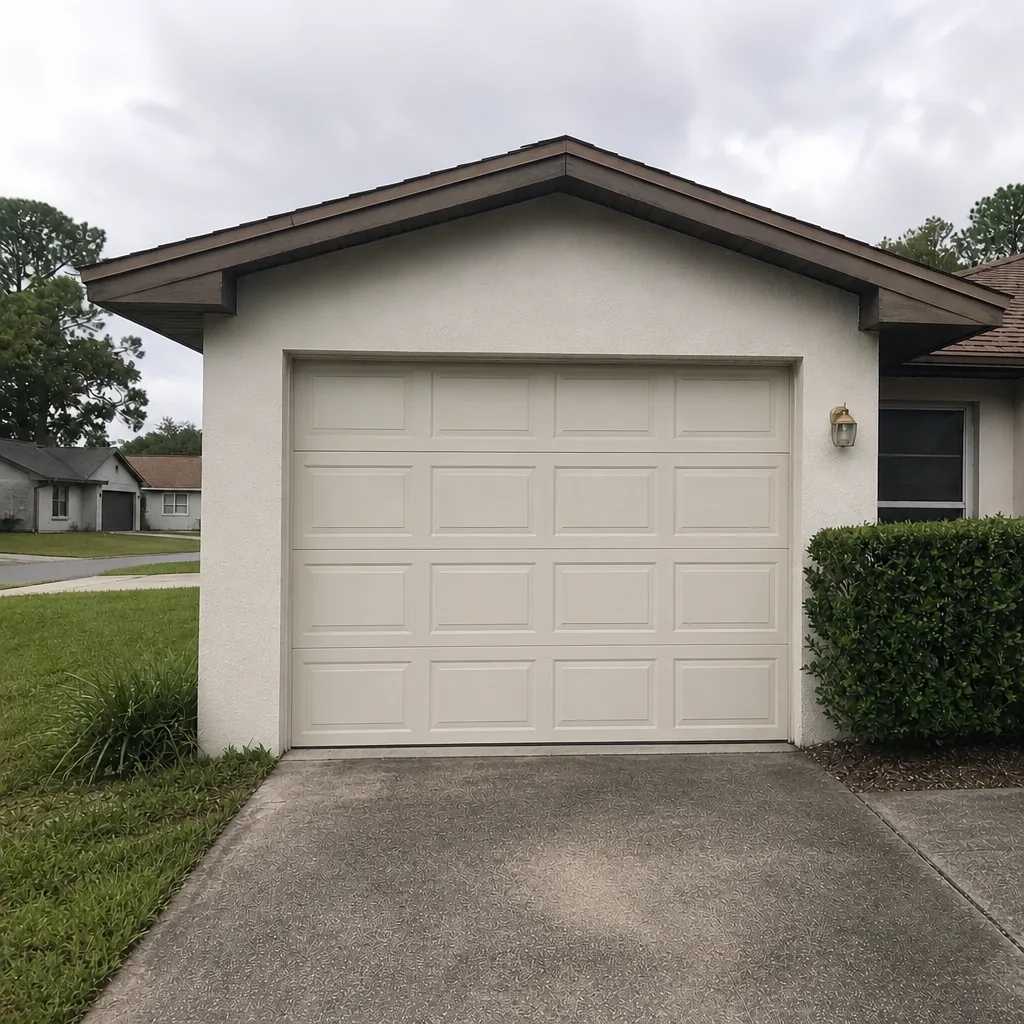 After
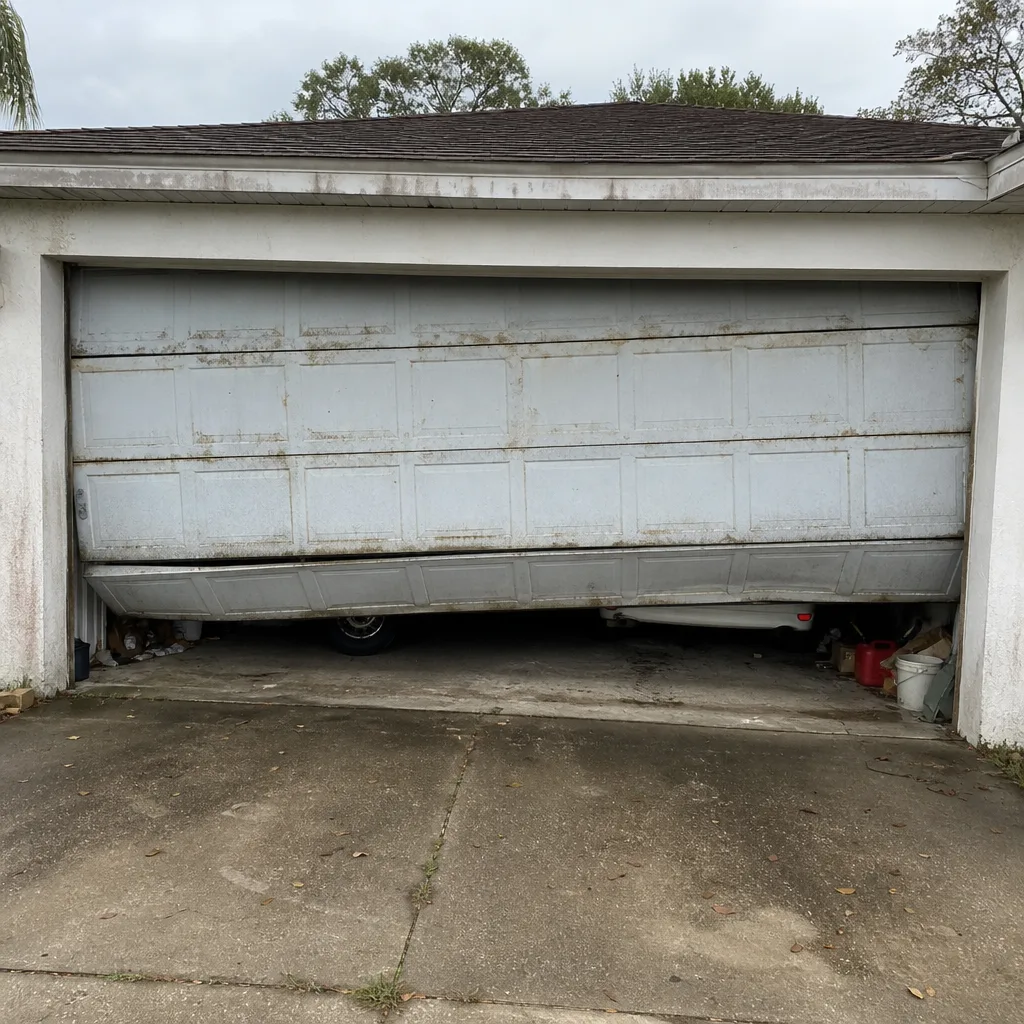 Before
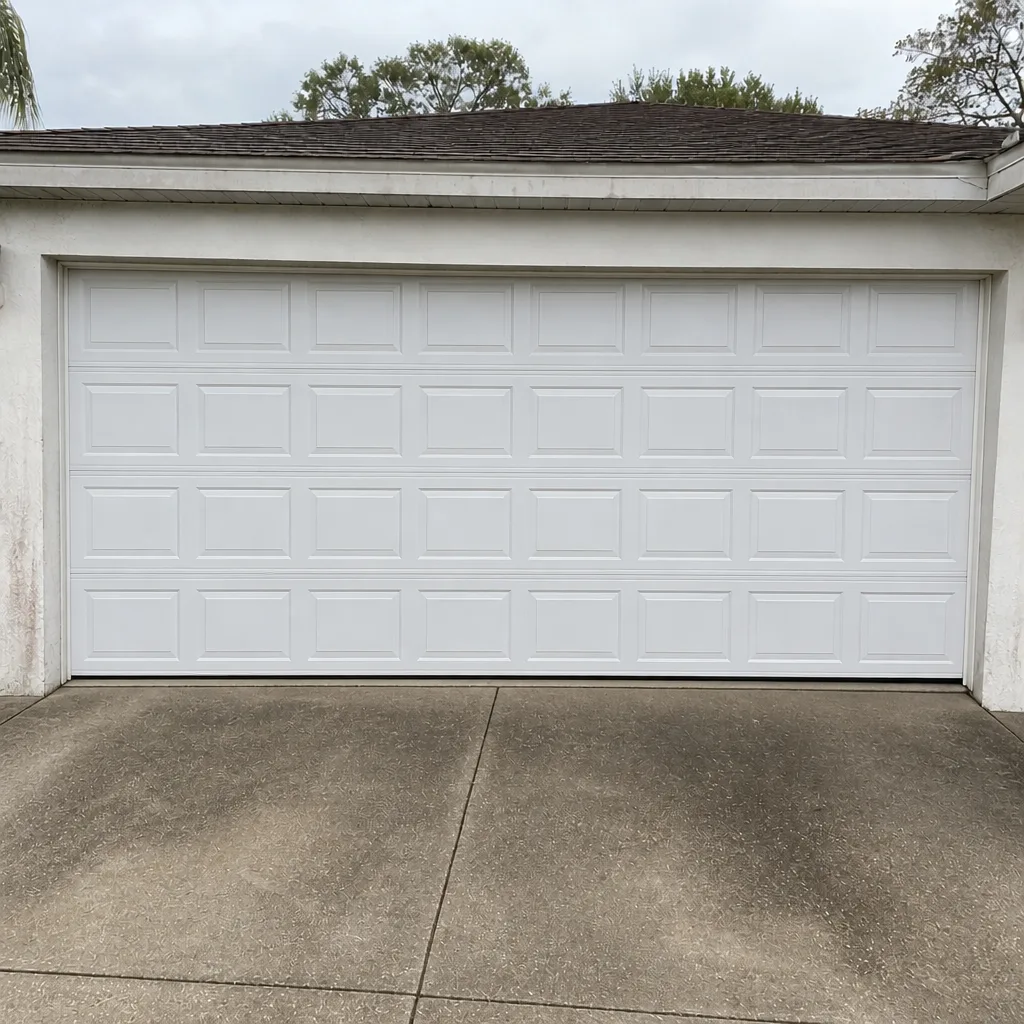 After
When to Call a Professional
Some garage door problems are safe to sort out yourself – a jammed manual release, a battery replacement, a weather seal that needs swapping. Others aren’t. Call a professional if the door is heavy to lift by hand, if the springs or cables look rusty, frayed, or slack, if the door comes down too fast, if a panel or track is bent, if the opener runs but the door doesn’t move, or if your door hasn’t been checked in years and storm season is close. Springs, cables, and a sagging or jammed door carry real injury risk, and a trained technician has the tools and the knowledge to handle them safely.
Ardent Garage Door Repair offers free estimates in Deltona – call (866) 611-8038. We’re a garage-door-only specialist, we work on the eight major brands most Deltona homeowners own, and the price is quoted and agreed before any work starts.
Frequently Asked Questions
It’s almost always a red cord or handle hanging from the carriage at the top center of the door, near the motor. Pull it toward the door and slightly toward the motor until the carriage clicks free. On LiftMaster, Chamberlain, Genie, and Raynor units the exact handle and its stiffness vary, so find and practice yours before an outage. If the cord is missing or jammed, call (866) 611-8038 for an exact quote – estimates are free.
Most backup openers are rated for a limited number of open-close cycles, not days – often around a dozen full operations before the battery is spent. A three-to-seven-day outage in Deltona will outlast that quickly if you run the door like normal. Use the manual release for routine trips and save the battery for emergencies, and test the battery at the breaker before each storm season.
Look for the wind rating label on the door’s edge, end stile, or a sticker on the track, then confirm the required design wind speed for your address with the Volusia County building department. If the label is missing or unreadable, have a technician check the door and its anchoring. Don’t assume an older door meets current code just because it’s still standing.
Start with wide shots of the entire door and opening, then close-ups of the damage, the rating label, the opener and its mounting, and the serial and model numbers. Confirm your phone’s timestamps are on. Don’t repair or discard anything until your insurer has seen the photos. Then call your agent and ask what else they need.
Yes, once you’ve released the carriage with the manual cord and confirmed the door lifts evenly by hand. If it’s dangerously heavy, drops on its own, or won’t lift, don’t force it – that points to a spring or cable problem that needs a technician. Call (866) 611-8038 for an exact quote on the repair – estimates are free.
Close the door, confirm the carriage is engaged so the opener holds it down, and lock it with a manual lock through the track or into the jamb so it can’t be lifted from outside. Move the car out if the door is unstable. Keep the door locked until it’s repaired. Call (866) 611-8038. We answer 24/7. Fast dispatch from 7am to 7pm, Sunday through Friday.
The Bottom Line
Garage door preparedness in Deltona comes down to a short list you can actually do: learn the manual release on your own opener and practice it with the door closed, test and replace your battery backup so you know how many cycles it truly has, find your wind rating label and confirm it against Volusia County code, secure a dead door with a manual lock, and photograph any storm damage in order before repairs begin. Do the prep while the power is on and the sky is clear. When something needs repair, spring work, cables, or a door that won’t operate safely, call a specialist rather than pushing through it yourself. And if you want to know what’s safe to use before the next storm – or you need a fix now – our Deltona team is ready to help.
Call (866) 611-8038 for a free estimate. We answer 24/7. Fast dispatch from 7am to 7pm, Sunday through Friday. The price is quoted and agreed before any work starts, and the written estimate sets the final price.
Written by the team at Ardent Garage Door Repair.